Landscape design plays an important role in transforming outdoor areas into beautiful, functional, and welcoming spaces. Whether it is a residential garden, villa, commercial property, hotel, resort, or public space, the right landscape design can enhance the appearance and usability of the surroundings.
There are many different types of landscape designs, each with its own characteristics, materials, plants, colours, and layout. Choosing the right style depends on the property's architecture, climate, available space, maintenance requirements, and personal preferences.
What Is Landscape Design?
Landscape design is the process of planning and arranging outdoor elements such as plants, trees, pathways, lawns, seating areas, water features, lighting, and hardscape elements.
A good landscape design creates a balance between softscape elements, such as plants and grass, and hardscape elements, such as paving, walls, steps, and outdoor structures.
Successful landscape architecture harmonizes softscape biological growth with hardscape spatial geometry to form functional, sustainable outdoor living spaces.
9 Major Types of Landscape Designs
1. Modern Landscape Design
Modern landscape design focuses on clean lines, simple forms, open spaces, and a contemporary appearance. It commonly uses geometric layouts, minimal planting, paved areas, outdoor seating, decorative stones, and modern lighting.
Modern landscaping is an excellent choice for contemporary villas, residential properties, offices, and commercial spaces.
- Clean and simple lines
- Geometric layouts
- Minimal and organized planting
- Modern paving and materials
- Outdoor lighting & functional spaces
2. Tropical Landscape Design
Tropical landscaping creates a lush and refreshing environment using dense greenery, large-leaf plants, palms, flowering plants, and natural materials. Water features, stone pathways, wooden elements, and outdoor seating further enhance the tropical atmosphere.
- Lush greenery & palm trees
- Large-leaf botanical species
- Water features & natural stone
- Relaxing outdoor seating areas
3. Minimalist Landscape Design
Minimalist landscaping follows the principle of “less is more.” It uses a limited selection of plants and materials while focusing on simplicity, balance, and functionality. Simple planting arrangements, open spaces, neutral materials, and clean pathways are commonly used.
- Simple layouts & limited plant varieties
- Open spaces & neutral color palettes
- Clean lines & low visual clutter
4. Japanese Landscape Design
Japanese landscape design is inspired by nature and focuses on harmony, balance, and tranquillity. Stone, water, carefully shaped plants, gravel, bridges, and pathways are commonly used to create a peaceful outdoor environment.
- Natural stones & water elements
- Raked gravel & wooden bridges
- Peaceful, balanced, and symbolic layouts
5. Mediterranean Landscape Design
Mediterranean landscaping is inspired by the coastal landscapes of southern Europe. It combines warm earthy colours, stone surfaces, ornamental plants, outdoor seating, and natural textures to create a warm and inviting atmosphere.
- Natural stone & warm terracotta tiles
- Ornamental olive/citrus plants & terracotta pots
- Shaded terraces & patio dining
6. English Garden Landscape Design
English garden design is known for its colourful planting, natural-looking layouts, flowering plants, shrubs, lawns, and charming pathways. Instead of highly geometric arrangements, this style creates a softer, organic garden appearance.
- Flowering perennials & green lawns
- Shrubs, clipped hedges & curved gravel paths
- Charming garden benches & soft planting drifts
7. Desert Landscape Design
Desert landscaping is designed for dry and hot environments where water conservation is crucial. Drought-tolerant plants, gravel, decorative rocks, palms, succulents, and efficient drip irrigation systems are central elements.
- Water-efficient xeriscaping
- Gravel, boulders & succulents
- Efficient smart irrigation & low maintenance
8. Contemporary Landscape Design
Contemporary landscape design combines modern aesthetics with practical outdoor living. It features structured planting, stylish paving, outdoor kitchens, seating areas, lighting, water features, and custom architectural features.
- Modern materials & outdoor kitchens
- Structured planting beds & ambient LED lighting
- Architectural water features
9. Sustainable Landscape Design
Sustainable landscaping focuses on reducing environmental impact while creating attractive, resilient outdoor spaces. It incorporates native plants, efficient irrigation, rain garden drainage, permeable paving, and eco-friendly material selection.
- Native & climate-appropriate species
- Permeable surfaces & natural rainwater management
- Reduced resource consumption
How to Choose the Right Landscape Design
Choosing the ideal landscape style should be based on the specific conditions and goals of your property:
1. Climate
Local temperature, rainfall, and sunlight dictate plant selection, soil requirements, and irrigation planning for long-term health.
2. Architecture
The landscape style should echo the building's lines—modern villas suit minimalist layouts while classic homes pair with soft garden styles.
3. Space & Scale
Property dimensions influence spatial zoning, path widths, seating placements, and plant scale to avoid overcrowding.
4. Maintenance
Consider available upkeep capacity. Low-maintenance gravel and hardscape suit busy owners and commercial developments.
Combining Different Landscape Styles
Landscape design does not always have to follow one strict typology. Different design elements can be thoughtfully combined to create a unique, customized outdoor environment.
For example, a modern villa can incorporate tropical plants, natural stone paving, minimalist pathways, and contemporary outdoor lighting. The result is a personalized landscape reflecting both architectural beauty and functional outdoor living.
Final Thoughts
There are many different types of landscape designs—from modern and minimalist styles to tropical, Japanese, Mediterranean, desert, and sustainable landscapes.
The best landscape design is one that balances beauty, functionality, climate suitability, maintenance, and property requirements.
With thoughtful planning and professional landscape execution, any outdoor area can be transformed into a comfortable, beautiful, and inviting destination.
Looking to transform your outdoor space? Greentek provides professional landscape design solutions tailored to the style, functionality, and requirements of your property.
Learn Professional Landscape Design & Styles
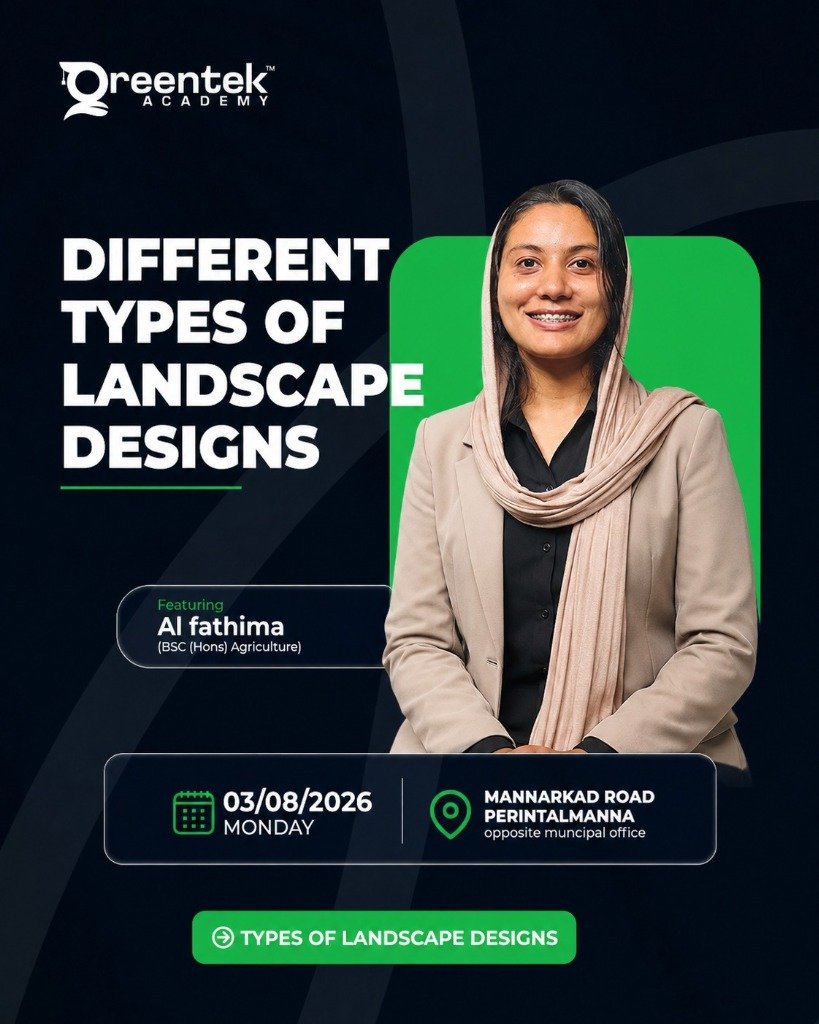
Master 2D CAD layouts, 3D visualizations, plant selection, and site execution under experts like Al Fathima at Greentek Academy Perinthalmanna.