
Introduction
Healthy soil is the foundation of every successful landscaping project. Whether designing a residential garden, a commercial landscape, or a beautiful outdoor space with lawns and ornamental plants, proper soil preparation is essential for healthy plant growth and long-term landscape performance.
Soil preparation and improvement for landscaping involve understanding soil properties, improving soil structure, enhancing drainage, and providing the nutrients plants need to grow. With the right soil management practices, landscape designers can create healthier, greener, and more sustainable outdoor environments.
What Is Soil Preparation in Landscaping?
Soil preparation is the process of getting the ground ready for planting. It includes removing unwanted materials, assessing soil conditions, loosening compacted soil where appropriate, improving drainage, and incorporating suitable organic matter or soil amendments.
The main objective is to create a favourable environment for plant roots to grow, absorb water and nutrients, and establish themselves successfully.
Proper soil preparation also helps reduce plant stress and supports the long-term health of lawns, trees, shrubs, and garden plants.
Why Is Soil Improvement Important?
Soil improvement plays an important role in landscape design and maintenance. Poor soil conditions can affect plant growth, water movement, and the overall appearance of a landscape.
The key benefits include:
Better root development
Suitable soil structure allows roots to grow and access water and nutrients.
Improved drainage
Proper soil management helps prevent waterlogging in areas that require free drainage.
Better water retention
Organic matter can help suitable soils retain moisture for plant use.
Enhanced nutrient availability
Appropriate soil amendments can improve nutrient availability and support healthy plant growth.
Reduced soil compaction
Improving compacted soil can increase pore space and support root growth.
Long-term landscape health
Healthy soil helps plants establish and maintain their growth over time.
Understanding Different Soil Types
Before beginning a landscaping project, it is important to identify the soil type and understand its characteristics.
1. Sandy Soil
Sandy soil has relatively large particles and generally drains quickly. However, it may retain less water and fewer nutrients than other soil types.
Improvement methods:
Incorporating suitable organic matter can improve moisture retention and nutrient-holding capacity.
2. Clay Soil
Clay soil contains very fine particles and can hold considerable water. It may become poorly drained or compacted, depending on its structure and site conditions.
Improvement methods:
Appropriate organic matter, careful soil management, and suitable drainage solutions can help improve soil structure. Avoid working clay soil when it is excessively wet.
3. Loamy Soil
Loamy soil generally contains a balanced combination of sand, silt, and clay. It often provides favourable conditions for many landscape plants because it can balance drainage, moisture retention, and nutrient availability.
4. Silty Soil
Silty soil contains fine particles and can retain moisture and nutrients. However, it may compact or erode when improperly managed.
Improvement methods:
Maintaining organic matter, minimising compaction, and managing surface runoff can support better soil structure.
Essential Steps in Soil Preparation for Landscaping
Step 1: Conduct a Soil Assessment
Start by examining the site. Identify the soil type, existing vegetation, drainage conditions, compacted areas, and any visible signs of erosion.
A soil test can help determine pH, nutrient levels, and other properties that influence plant selection and soil amendment decisions.
Step 2: Clear the Site
Remove construction debris, unwanted weeds, stones, and other materials that may interfere with planting. Preserve healthy existing trees and vegetation wherever possible.
Site clearing should be carried out carefully to avoid unnecessary disturbance to valuable topsoil.
Step 3: Improve Soil Structure
Compacted soil restricts the movement of air and water and can make root establishment difficult.
Depending on the site, carefully loosening the soil and incorporating suitable organic matter can improve its structure. Avoid excessive tilling, particularly when the soil is wet.
Step 4: Add Organic Matter
Compost and other suitable organic materials can improve soil structure, moisture management, and nutrient availability.
Choose amendments according to the soil test results and the needs of the intended plants. Avoid using unsuitable or contaminated materials.
Step 5: Check Soil pH and Nutrients
Different plants have different soil pH and nutrient requirements. Testing the soil helps determine whether amendments are necessary.
Lime, sulphur, fertilisers, and other soil amendments should be used only when appropriate for the soil conditions and plant requirements.
Step 6: Ensure Proper Drainage
Good drainage is essential for many landscape plants. Waterlogged soil can reduce oxygen around roots and increase the risk of root damage.
Possible solutions include correcting surface grading, improving soil structure, or installing suitable drainage systems where required. Drainage design should consider the entire site and the safe destination of excess water.
Step 7: Prepare the Planting Areas
Once the soil has been improved, prepare planting beds, lawn areas, and tree pits according to the landscape design.
Use suitable planting depths, maintain appropriate soil levels, and avoid burying tree root flares. The final ground preparation should support the planned irrigation system and landscape layout.
Soil Preparation Challenges in GCC Landscaping
Landscaping projects in Gulf Cooperation Council (GCC) countries often face challenging soil and climate conditions. High temperatures, limited rainfall, salinity, and rapid moisture loss can affect plant establishment.
☀️ Arid Soil Management in Gulf Environments
Managing Sandy and Low-Organic-Matter Soils
Many sites contain sandy soils with limited water and nutrient retention. Suitable organic amendments can help improve these properties when applied according to soil conditions.
Addressing Salinity
Salt accumulation can affect water uptake and plant health. Soil and irrigation-water testing can help identify salinity problems and guide appropriate management.
Where suitable, drainage and controlled leaching may help reduce excess salts, but the approach must consider soil permeability, water quality, and local environmental requirements.
Improving Water Efficiency
Efficient irrigation systems, appropriate soil preparation, and climate-suitable plant selection can reduce unnecessary water use.
Mulching and maintaining suitable soil organic matter can also help reduce evaporation and support moisture management.
Protecting Soil from Heat
High soil temperatures can increase moisture loss and stress plant roots. Suitable mulch and appropriate planting strategies can help protect the soil surface, provided they are compatible with the selected plants and local conditions.
Common Soil Preparation Mistakes to Avoid
Landscape designers should avoid the following mistakes:
- Planting without assessing soil conditions.
- Adding fertilisers or amendments without understanding soil requirements.
- Overworking soil when it is too wet.
- Ignoring drainage and waterlogging issues.
- Using unsuitable or contaminated compost.
- Failing to consider soil salinity in arid regions.
- Compaction caused by heavy machinery and repeated site traffic.
- Planting species that are unsuitable for the local climate and soil conditions.
Avoiding these mistakes helps create a stronger foundation for a healthy and sustainable landscape.
Conclusion
Soil preparation and improvement are essential stages of successful landscape development. Understanding soil types, assessing soil conditions, improving structure, managing drainage, and selecting suitable amendments can significantly support plant establishment and long-term landscape performance.
In regions with challenging environmental conditions, such as the GCC, soil management becomes especially important for maintaining attractive and water-efficient outdoor spaces.
At Greentek Academy, understanding soil preparation is an important part of learning the principles of landscape design. Building knowledge of soil properties and improvement techniques helps aspiring landscape designers develop practical skills for real-world projects.
Healthy soil. Strong roots. Beautiful landscapes.
Master Soil Science & Modern Landscape Horticulture
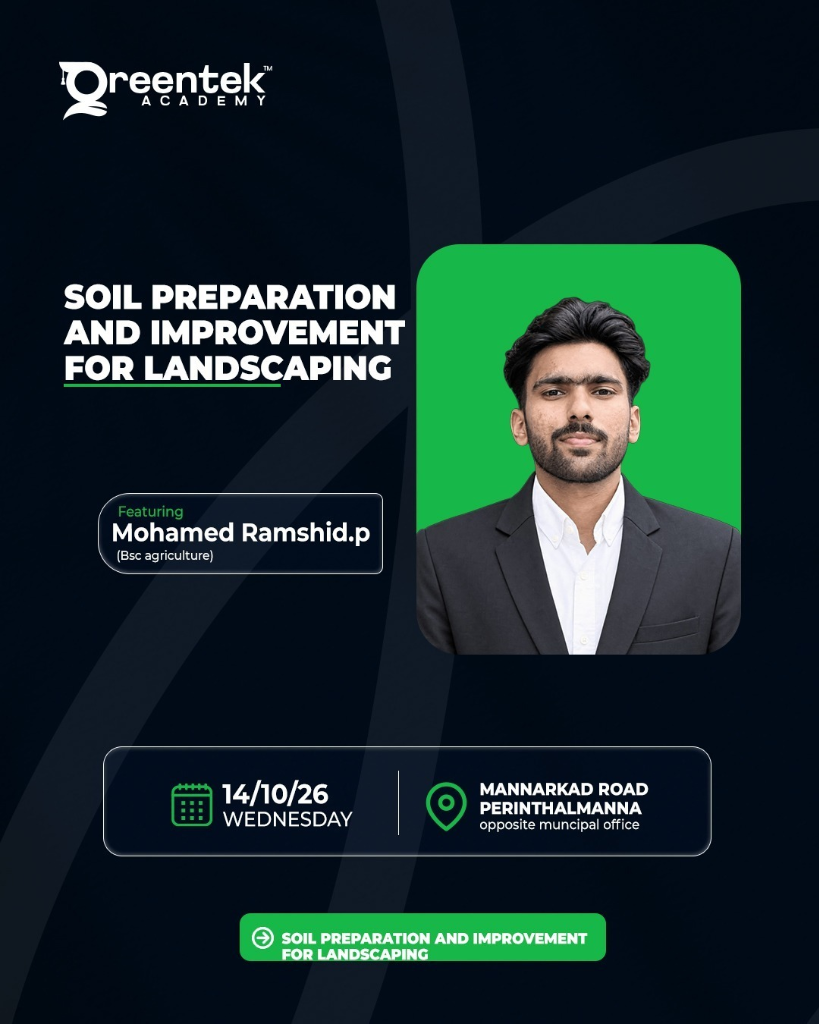
Learn soil testing, organic amendment formulation, drainage engineering, and live site execution under experts like Mohamed Ramshid.p at Greentek Academy Perinthalmanna.