Introduction
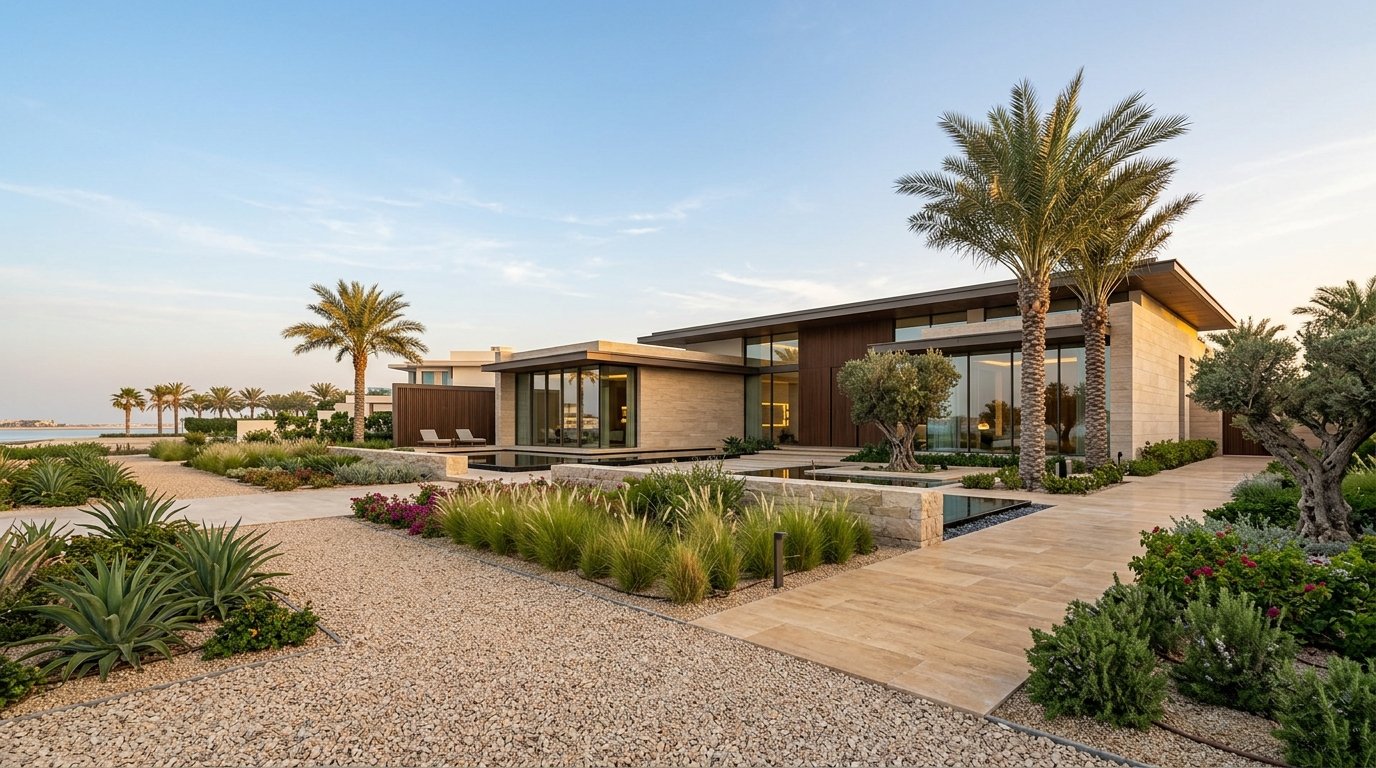
The Gulf Cooperation Council (GCC) region presents unique challenges for landscape design. High temperatures, intense sunlight, limited rainfall, and the need for efficient water management make traditional landscaping approaches less suitable for many outdoor spaces.
In this environment, water-efficient landscape design in the GCC provides a practical way to create attractive and functional gardens while using water more responsibly. The approach combines climate-appropriate plant selection, efficient irrigation, soil management, hydrozoning, mulching, and thoughtful landscape planning.
Water-efficient landscaping does not mean eliminating greenery. Instead, it focuses on using the right plants, applying water where it is needed, and designing outdoor spaces according to local environmental conditions.
According to the U.S. Environmental Protection Agency (EPA), water-smart landscaping can involve selecting appropriate plants, maintaining healthy soil, using efficient irrigation, and adapting maintenance practices to site conditions.
Why Water-Efficient Landscaping Matters in the GCC
Water management is an important consideration in regions with hot and dry climatic conditions. Landscaping can require regular irrigation, particularly when plants are not naturally suited to the local environment.
For this reason, designing landscapes around water efficiency from the beginning can help reduce unnecessary irrigation and make outdoor spaces easier to manage.
The EPA recommends considering factors such as local climate, sunlight, shade, soil conditions, plant selection, and maintenance when developing a water-efficient landscape.
Dubai Electricity and Water Authority (DEWA) also recommends practical irrigation measures such as watering during cooler periods, checking irrigation systems for leaks, adjusting automatic irrigation according to weather and seasonal demand, and avoiding fine mist that can increase evaporation.
Key objectives of water-efficient landscaping include:
- Reducing unnecessary irrigation
- Selecting plants suited to local conditions
- Improving irrigation efficiency
- Supporting healthy plant growth
- Reducing landscape maintenance requirements
- Creating sustainable outdoor environments
What Is Water-Efficient Landscape Design?
Water-efficient landscape design is a landscaping approach that aims to create attractive, functional outdoor spaces while minimizing unnecessary water use.
It considers the complete landscape rather than focusing only on irrigation. Plant selection, soil, drainage, sunlight, irrigation zones, hardscape, shade, and maintenance all contribute to overall water efficiency.
The EPA recommends choosing regionally appropriate, low-water-use plants, grouping plants according to their watering requirements, maintaining healthy soil, using mulch, and irrigating only when necessary.
For GCC properties, this approach can be particularly useful for:
- Villas
- Residential communities
- Hotels and resorts
- Commercial buildings
- Office spaces
- Public landscapes
- Educational institutions
- Large-scale developments
Key Principles of Water-Efficient Landscape Design in the GCC
Choose Drought-Tolerant and Climate-Appropriate Plants
Plant selection is one of the most important decisions in a water-efficient landscape.
Plants that are naturally suited to a region’s climate and growing conditions can require less supplemental irrigation once established. The EPA recommends using regionally appropriate, low-water-use, and drought-tolerant plants as part of water-efficient landscape planning.
For GCC landscape projects, plant selection should consider:
- Heat tolerance
- Water requirements
- Soil conditions
- Sun exposure
- Wind exposure
- Maintenance requirements
- Overall landscape design
Instead of selecting plants only for their appearance, landscape designers can evaluate whether each plant is appropriate for the property’s environmental conditions.
Examples of suitable landscape categories can include:
- Drought-tolerant shrubs
- Climate-adapted trees
- Suitable palms
- Low-water ground covers
- Heat-tolerant ornamental plants
- Regionally appropriate species
The exact plant palette should always be selected according to the specific GCC location and site conditions.
Install Efficient Irrigation Systems
An efficient irrigation system is a fundamental part of water-saving landscaping in the GCC.
Traditional irrigation can waste water when systems are incorrectly positioned, poorly maintained, or operated for longer than necessary.
Microirrigation and drip irrigation can deliver water more directly to plant root zones. The EPA explains that microirrigation applies water slowly and directly to plants where it is needed.
Smart irrigation technology can further improve water management by adjusting irrigation according to landscape requirements.
Potential solutions include:
- Drip irrigation
- Microirrigation
- Automatic irrigation controllers
- Soil-moisture sensors
- Weather-based controllers
- Efficient sprinkler systems
- Zoned irrigation
DEWA recommends checking sprinkler valves for leaks, maintaining sprinkler heads, adjusting automatic irrigation according to seasonal requirements, and positioning sprinklers so they do not unnecessarily water pavements.
Create Hydrozones
Not every plant in a landscape needs the same amount of water.
Hydrozoning involves grouping plants with similar water requirements into the same irrigation zone. This allows irrigation to be managed according to the needs of each planting area.
The EPA specifically recommends grouping vegetation with similar watering needs into hydrozones because this can help prevent both overwatering and underwatering.
For example, a landscape could have separate zones for:
- Trees
- Shrubs
- Flower beds
- Lawn
- Ground covers
- Low-water planting
This makes irrigation management more precise and can help prevent one irrigation schedule from being applied unnecessarily to the entire property.
Improve Soil Health
Soil plays an important role in how efficiently water is absorbed and retained.
Compacted or unsuitable soil can affect water infiltration and plant growth. The EPA recommends maintaining healthy soil because healthy soils can help retain water, improve infiltration, and reduce runoff.
Before installing a landscape, soil can be assessed for:
- Soil structure
- Drainage
- Compaction
- pH
- Organic matter
- Nutrient levels
- Salinity
Appropriate soil preparation and amendments can then be incorporated according to the specific requirements of the site and plants.
Use Mulch to Reduce Evaporation
Mulching is a simple but effective technique that can support water-efficient landscaping.
A suitable layer of mulch helps create a protective layer over the soil surface. According to the EPA, mulch can reduce evaporation, help retain soil moisture, suppress weeds, moderate soil temperature, and reduce erosion.
Mulch can be used around:
- Trees
- Shrubs
- Flower beds
- Garden plants
- Selected planting areas
The type and depth of mulch should be selected according to the landscape and plant requirements.
Reduce Unnecessary Lawn Areas
Large areas of turf can increase irrigation and maintenance requirements, particularly in hot climates.
The EPA recommends using turf strategically in locations where it has a practical purpose and considering lower-water-use turf varieties suitable for the local climate.
Instead of covering an entire garden with lawn, designers can combine turf with:
- Drought-tolerant planting
- Ground covers
- Decorative gravel
- Natural stone
- Pathways
- Outdoor seating
- Shade structures
This creates a more diverse landscape while allowing lawn areas to be used where they provide the greatest functional value.
Incorporate Shade Into Landscape Planning
Shade is an important consideration when designing outdoor spaces in hot climates.
Trees and vegetation can be positioned strategically to provide shaded areas. The EPA notes that shade trees can help keep landscapes cooler during sunny weather and that shaded landscape areas may require less supplemental water.
Strategically placed trees can also improve the usability of outdoor areas by creating more comfortable spaces for:
- Seating
- Walking
- Recreation
- Outdoor dining
- Relaxation
Landscape orientation, building location, sun exposure, and plant placement should therefore be considered together during the design stage.
Plan Drainage and Water Flow
Water efficiency is not only about how much water is applied. It is also about how effectively water reaches the soil and plant root zones.
Poorly planned landscapes can experience runoff or uneven water distribution. The EPA recommends appropriate site preparation and grading to improve water infiltration and reduce runoff.
Landscape planning should therefore consider:
- Site levels
- Drainage
- Soil conditions
- Irrigation zones
- Planting areas
- Hardscape
- Water movement
A properly coordinated landscape design can help prevent water from being unnecessarily lost through runoff.
Combine Hardscape and Softscape Efficiently
A water-efficient landscape does not need to be completely covered with plants.
Hardscape features such as:
- Pathways
- Patios
- Pergolas
- Seating areas
- Decorative stone
- Outdoor living spaces
can be integrated with carefully selected planting areas.
The objective is to create a balance between functional hardscape and climate-appropriate greenery.
Thoughtful zoning can help ensure that planted areas are located where they provide the greatest visual, environmental, or functional value.
Maintain the Irrigation System Regularly
Even a well-designed irrigation system can become inefficient without regular maintenance.
Leaks, blocked emitters, damaged sprinkler heads, incorrect timer settings, and poor water distribution can result in unnecessary water use.
DEWA recommends periodically checking irrigation valves for leaks, maintaining sprinkler heads, and adjusting automatic irrigation timers according to weather and seasonal water requirements.
The EPA also recommends checking irrigation systems, ensuring zones are programmed correctly, and making seasonal adjustments to irrigation schedules.
Regular maintenance should include:
- Checking for leaks
- Inspecting drip lines
- Checking sprinkler heads
- Adjusting irrigation timers
- Monitoring plant health
- Checking soil moisture
- Removing weeds
- Maintaining mulch
Benefits of Water-Efficient Landscape Design in the GCC
Reduced Water Waste
Using appropriate plants, hydrozones, efficient irrigation, and proper maintenance can help reduce unnecessary landscape irrigation.
Lower Maintenance Requirements
Climate-appropriate and drought-tolerant plants can reduce the need for supplemental irrigation once established, depending on species and local conditions.
Healthier Plants
Matching plants with suitable soil, sunlight, and water conditions can help reduce both overwatering and underwatering.
Better Outdoor Comfort
Strategically placed trees and shade can contribute to more comfortable outdoor environments in sunny conditions.
More Sustainable Landscapes
Water-efficient landscape practices support responsible resource use and can form part of broader sustainable landscape planning.
Dubai Municipality’s 2026 sustainable home garden initiative specifically highlighted sustainable landscaping, efficient irrigation, resource conservation, and innovative gardening practices as elements of sustainable garden design.
Water-Efficient Landscape Design for Villas in the GCC
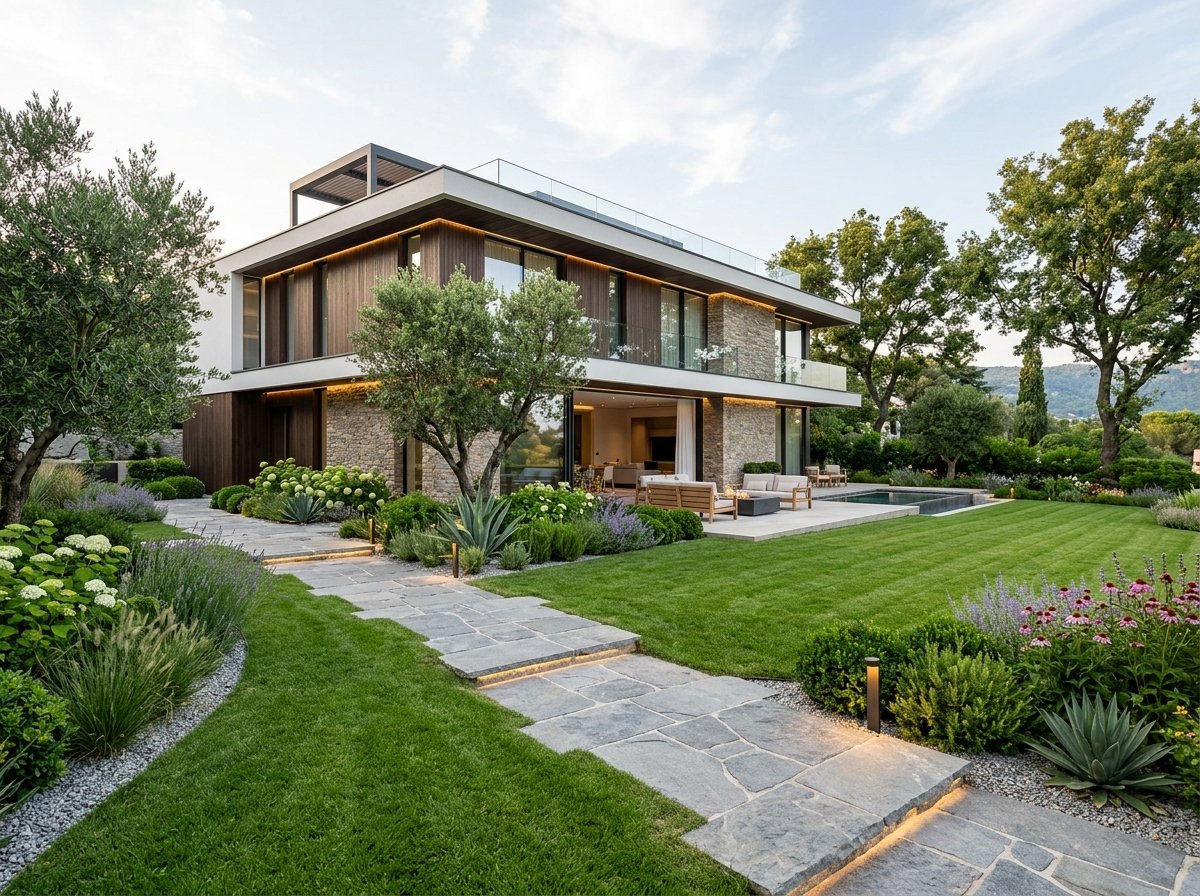
Villas often combine gardens, lawns, pathways, swimming pools, outdoor seating, and entertainment areas.
A water-efficient villa landscape can integrate:
- Drought-tolerant planting
- Efficient irrigation
- Shaded seating
- Limited lawn areas
- Decorative hardscape
- Mulched planting beds
- Separate irrigation zones
Rather than applying the same irrigation schedule throughout the property, each landscape area can be designed according to its specific function and water requirements.
This approach allows homeowners to maintain an attractive garden while improving overall water management.
Water-Efficient Landscaping for Hotels and Resorts
Hotels and resorts often contain extensive landscaped areas, making irrigation planning an important part of landscape development.
Large properties can benefit from:
- Centralized irrigation control
- Irrigation zoning
- Drip irrigation
- Smart controllers
- Climate-appropriate plants
- Reduced turf areas
- Shade planting
- Regular irrigation audits
The landscape should be designed as a complete system where planting, irrigation, drainage, soil, and maintenance work together.
Water-Efficient Landscaping for Commercial Properties
Office buildings, residential developments, shopping areas, educational institutions, and other commercial properties can also incorporate water-efficient landscape principles.
A commercial landscape plan may include:
- Site assessment
- Soil evaluation
- Plant selection
- Hydrozoning
- Irrigation planning
- Drainage planning
- Hardscape integration
- Landscape installation
- Regular maintenance
Planning water efficiency at the design stage can help create landscapes that are more appropriate for local climatic conditions.
The Role of Smart Technology in Landscape Water Management
Technology can make irrigation management more responsive and precise.
Soil-moisture-based controllers can adjust irrigation according to measured soil moisture, while weather-based systems can help modify watering schedules according to environmental conditions.
Modern landscape projects can therefore consider technologies such as:
- Smart irrigation controllers
- Soil-moisture sensors
- Weather-based irrigation
- Automated timers
- Water meters
- Irrigation monitoring systems
Technology should be selected according to the size, type, planting design, and maintenance requirements of the property.
How to Design a Water-Efficient Landscape in the GCC
Assess the Site
Evaluate soil, sunlight, shade, wind exposure, drainage, existing plants, and available irrigation infrastructure.
Select Appropriate Plants
Choose plants according to climate, water requirements, soil conditions, and landscape objectives.
Create Hydrozones
Group plants with similar water requirements into separate irrigation zones.
Design the Irrigation System
Use suitable irrigation technology and ensure water reaches the appropriate plant root zones.
Prepare the Soil
Improve soil conditions where necessary to support healthy plant growth and efficient water infiltration.
Add Mulch
Use suitable mulch around planting areas to help reduce evaporation and retain soil moisture.
Add Shade and Functional Hardscape
Integrate trees, seating, pathways, and other landscape features according to the property’s requirements.
Monitor and Maintain
Regularly inspect irrigation equipment and adjust watering schedules according to weather, season, and plant requirements.
Why Professional Landscape Design Matters
Water-efficient landscaping involves more than simply choosing plants that require less water.
A successful design considers the relationship between:
- Plant selection
- Soil
- Irrigation
- Drainage
- Sunlight
- Shade
- Hardscape
- Maintenance
- Property use
Professional landscape planning can help bring these elements together into one coordinated design.
For GCC properties, this is particularly important because the landscape needs to perform effectively under demanding climatic conditions while still meeting aesthetic and functional expectations.
Conclusion
Water-efficient landscape design in the GCC offers a practical approach to creating beautiful, functional, and more sustainable outdoor spaces.
From selecting drought-tolerant plants and creating hydrozones to installing efficient irrigation, improving soil, using mulch, reducing unnecessary lawn areas, and maintaining irrigation systems correctly, each design decision can contribute to better water management.
The key is to design the landscape according to its environment rather than treating water efficiency as an additional feature.
A well-planned landscape can combine beauty, functionality, technology, sustainability, and responsible water use—creating outdoor spaces that are better suited to the unique conditions of the GCC.